
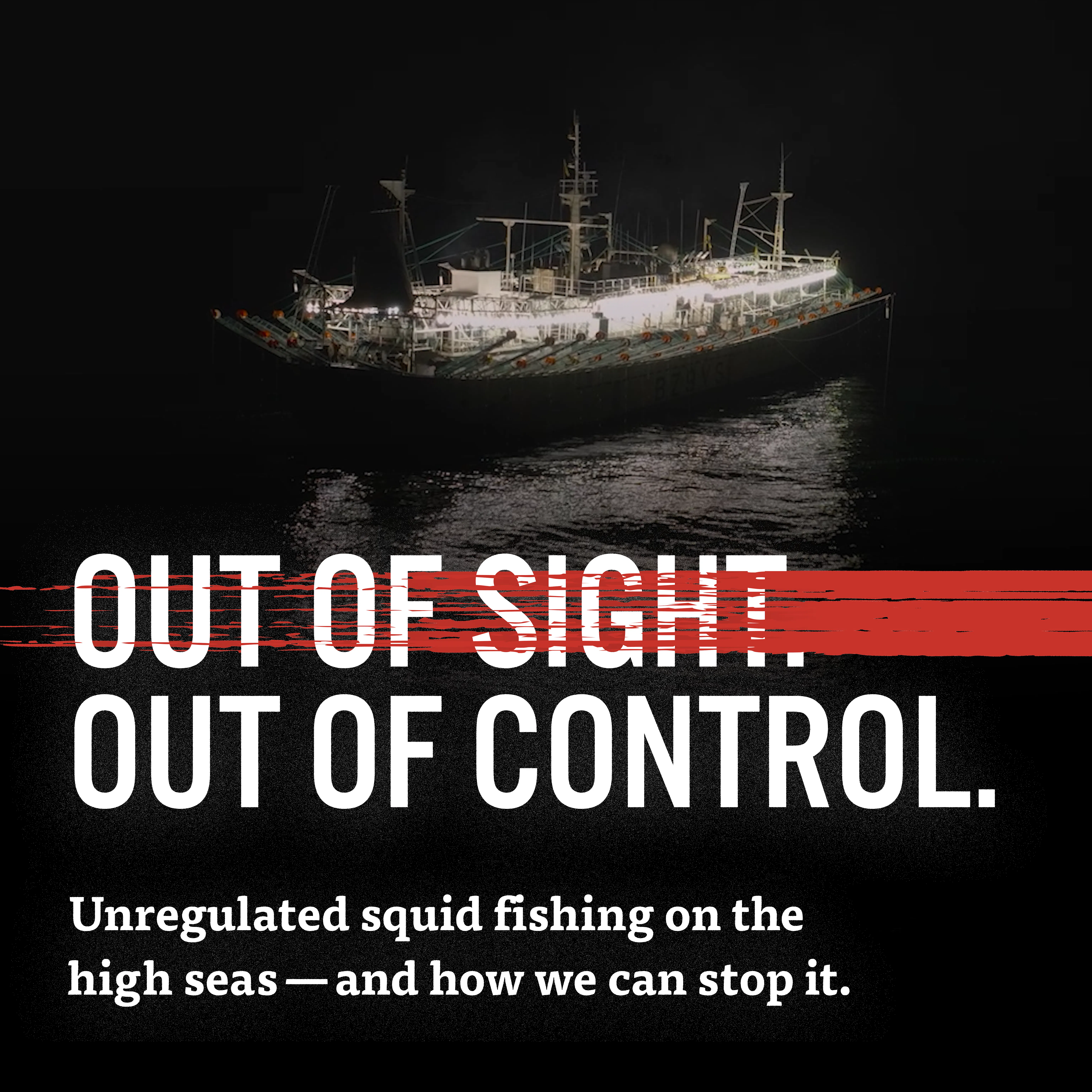

Over the last five years, the Environmental Justice Foundation has interviewed more than 430 fishers who had worked across 249 squid vessels in the Northwest Indian Ocean, the Southeast Pacific, and the Southwest Atlantic.
What they described—in testimony after testimony, from fishery to fishery—reveals a system of injustice at sea: forced labour, shark finning, crew deaths, and tainted catch that flows onto the plates of consumers who have no way of knowing where it came from or who paid the price for it.
This is how the global squid fleet operates when no one is watching.
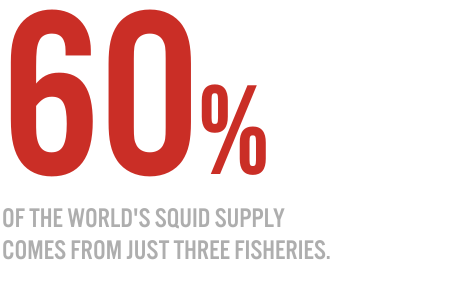
The global squid market is worth US $12.7 billion.
The EU, US, China, Japan and South Korea are its biggest buyers.
The fleets supplying those markets operate on the high seas: beyond national jurisdiction, beyond meaningful oversight, and in most cases beyond any multilateral body with the mandate or the will to stop them.
In a system where tainted squid products enter global markets every day, consumers have no choice as governments and retailers are becoming complicit in a status quo of exploitation and secrecy.

ㅤ

Exploitation in all forms

Human rights
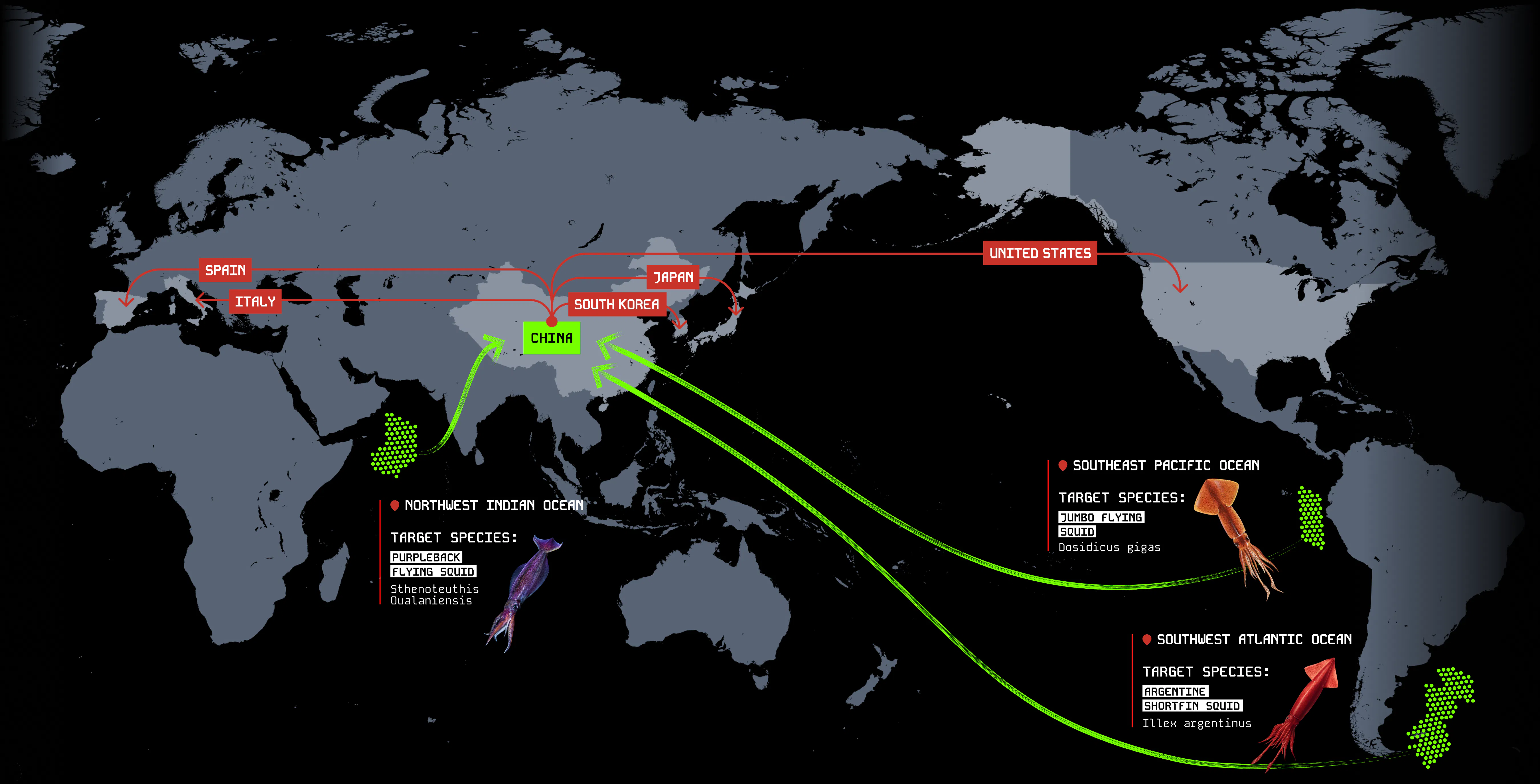
The median fisher interviewed reported nine out of twelve indicators of forced labour. Violence is systemic.
Physical abuse, debt bondage, document seizure, wages withheld or never paid are examples of the many injustices crew members face onboard vessels that span oceans and flag states. At least 25 deaths were confirmed, every one of them on a Chinese-flagged vessel.
Abuse is not the exception. It is the operational norm.
ㅤㅤ
Environment
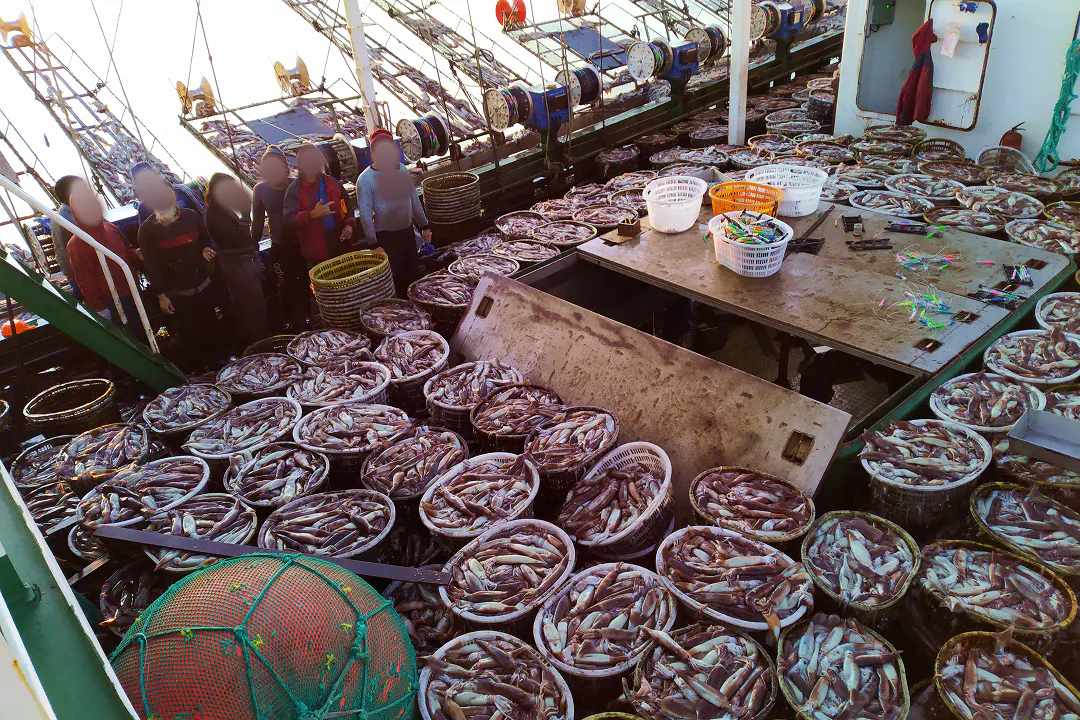
Argentine shortfin squid, jumbo squid, purpleback squid—three species that together account for a sizeable majority of what the world consumes—are caught without quotas, catch limits, or any science-based ceiling on how much can be taken. Population collapses have already happened in multiple squid fisheries.
The same overfishing pressure is now building simultaneously across three oceans.
ㅤㅤ
Obscuring supply chains
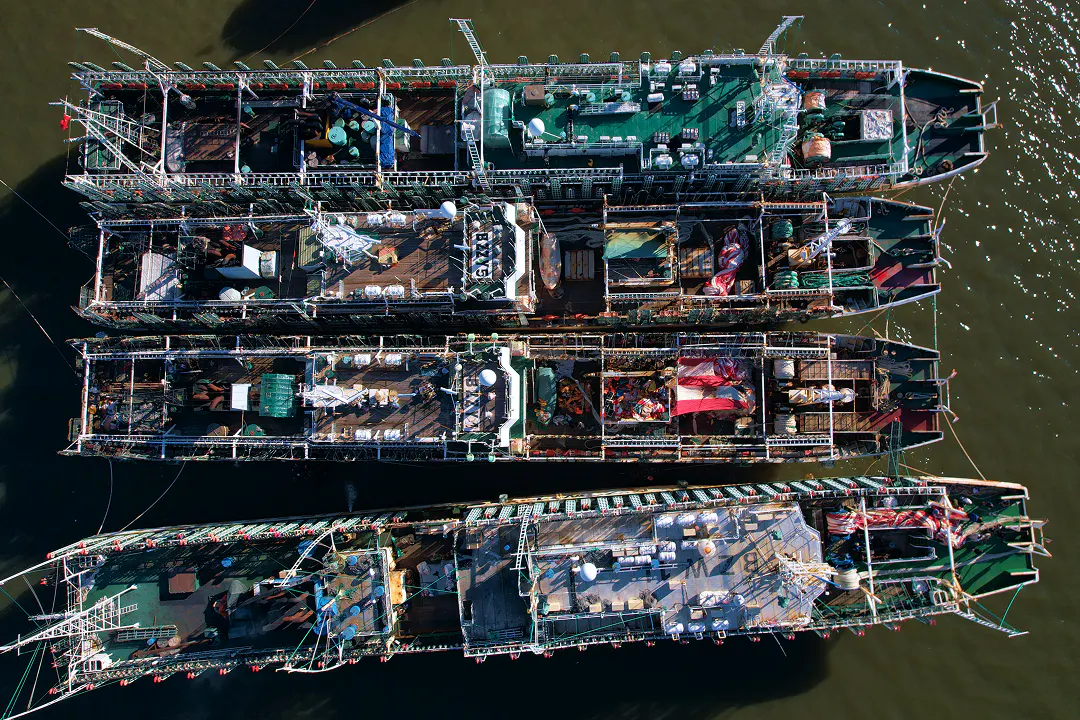
97% percent of fishers interviewed told EJF their vessels trans-shipped catch at sea, transferring it to refrigerated cargo ships hundreds of kilometres from shore, out of sight of any port authority.
This practice keeps vessels fishing indefinitely, strips products of their origin, and it makes it almost impossible for anyone downstream—processor, importer, retailer, consumer—to know what they're buying or where it came from.
The longer the voyage, the more likely the fishers on board were to witness or experience violent abuse, long hours and squalid living conditions.
ㅤㅤ
Animal abuse
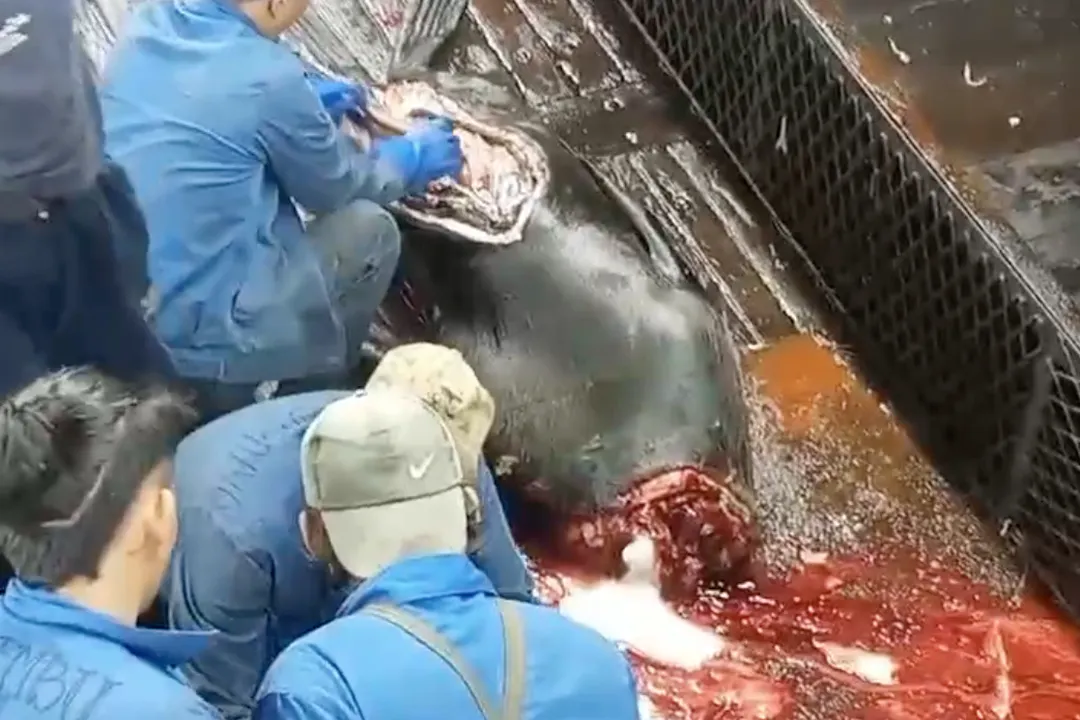
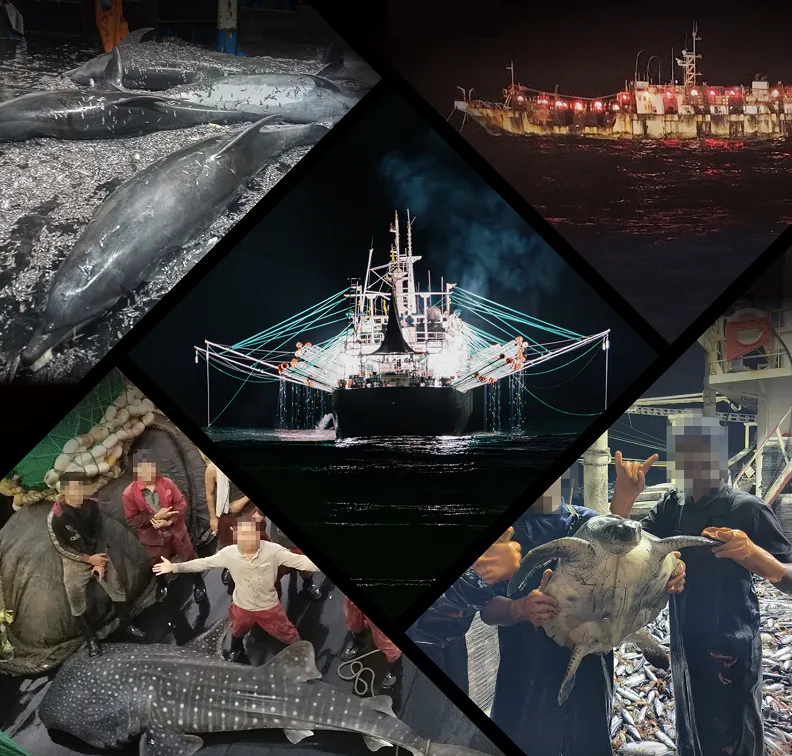
Shark finning was documented across all three fisheries. Dolphins, turtles, whale sharks, manta rays, seals, and penguins are deliberately caught, killed, or mutilated.
This isn’t accidental. It’s a matter of practice.
In the Northwest Indian Ocean, 62% of vessels were implicated in shark finning and 66% in the capture of vulnerable megafauna such as endangered whale sharks. In some cases, dolphins were killed and used as bait. In one instance, a turtle was kept alive, wounded, and tied to the side of a vessel for weeks.
ㅤㅤ
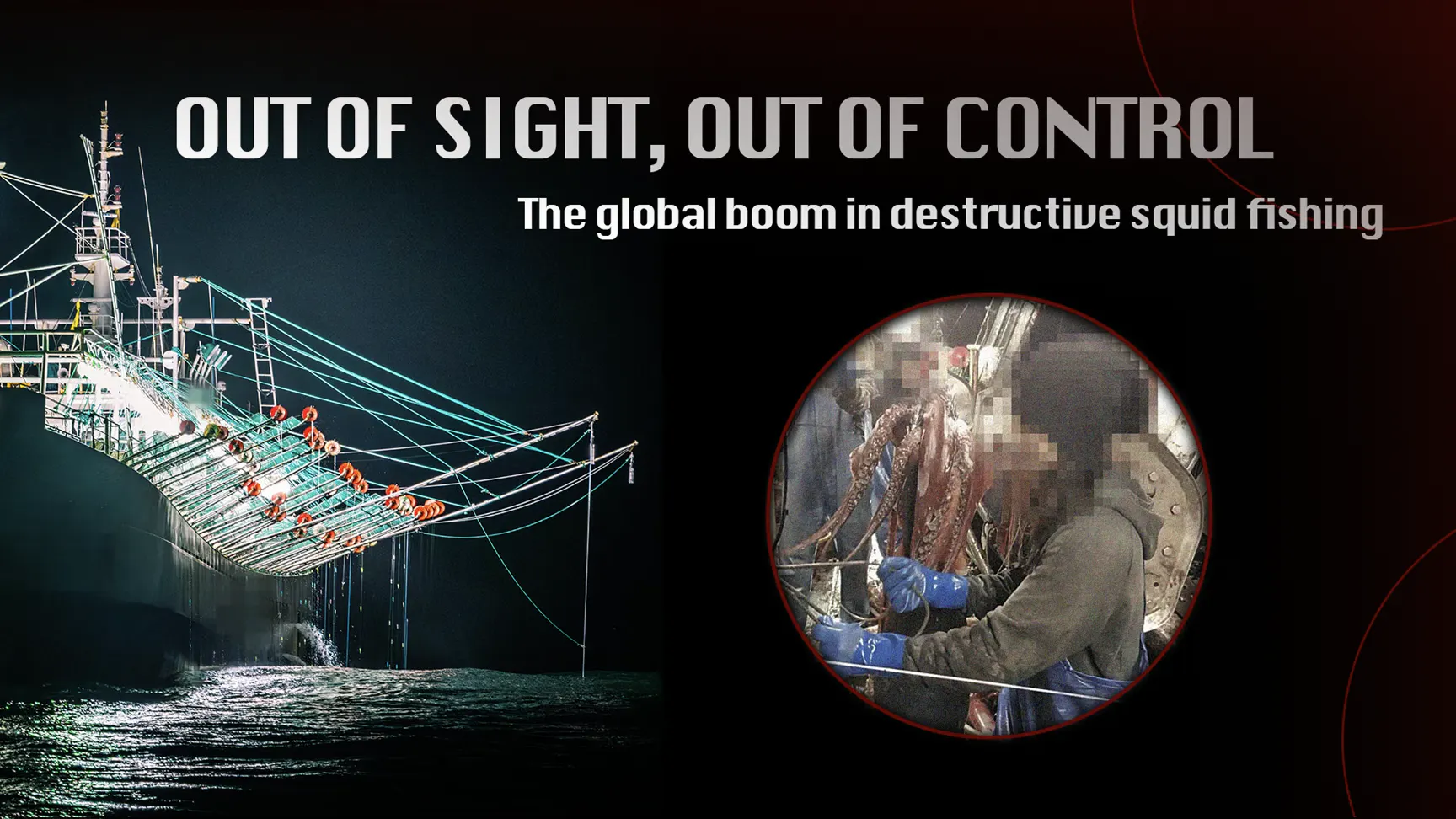
Crew Testimonials
from Chinese vessels in the southwest Atlantic






WATCH NOW
How can governments change the status quo?

Treat unregulated squid as what it is: high-risk. The EU IUU Regulation, the US Seafood Import Monitoring Program, and equivalent national regimes should designate squid from unregulated high seas fisheries accordingly.

Cap fishing trips at 12 months. Binding limits, mandatory port returns, and inspection by competent officials at the end of every trip. Shorter trips are less likely to result in abuses, of people and wildlife alike.

End unmonitored trans-shipment. No at-sea transfers without pre-authorisation and independent oversight by human observers and electronic monitoring systems.

Close the governance gap. The Northwest Indian Ocean and Southwest Atlantic have no Regional Fisheries Management Organisation (RFMO) with competence over squid. Multilateral negotiations to expand existing ones or establish new ones are overdue.

End ineffective high seas regulation. Although the Southeast Pacific squid fishery is governed by the South Pacific Regional Fisheries Management Organisation, no substantive regulation on squid has yet been adopted. This needs to change.

Fix the labelling. Consumers cannot verify what they're buying because squid can legally reach their plates with no species, vessel, or catch-area information. Our leaders must close that loophole.

Implement the Global Charter for Fisheries Transparency: ten low- to no-cost principles that undo the secrecy these fleets depend on.
ㅤ
ㅤ


FAQs
Aren't there laws to govern international waters?
Why are these fisheries unregulated?
What is "Mile 201" and how could it become relevant in a multilateral context?
What is at-sea trans-shipment, and why does it matter?
How does this squid reach my plate?
Stay up to date
Get the latest updates on how to support sustainable and ethical fisheries across the world’s oceans.
Powered by


ㅤ